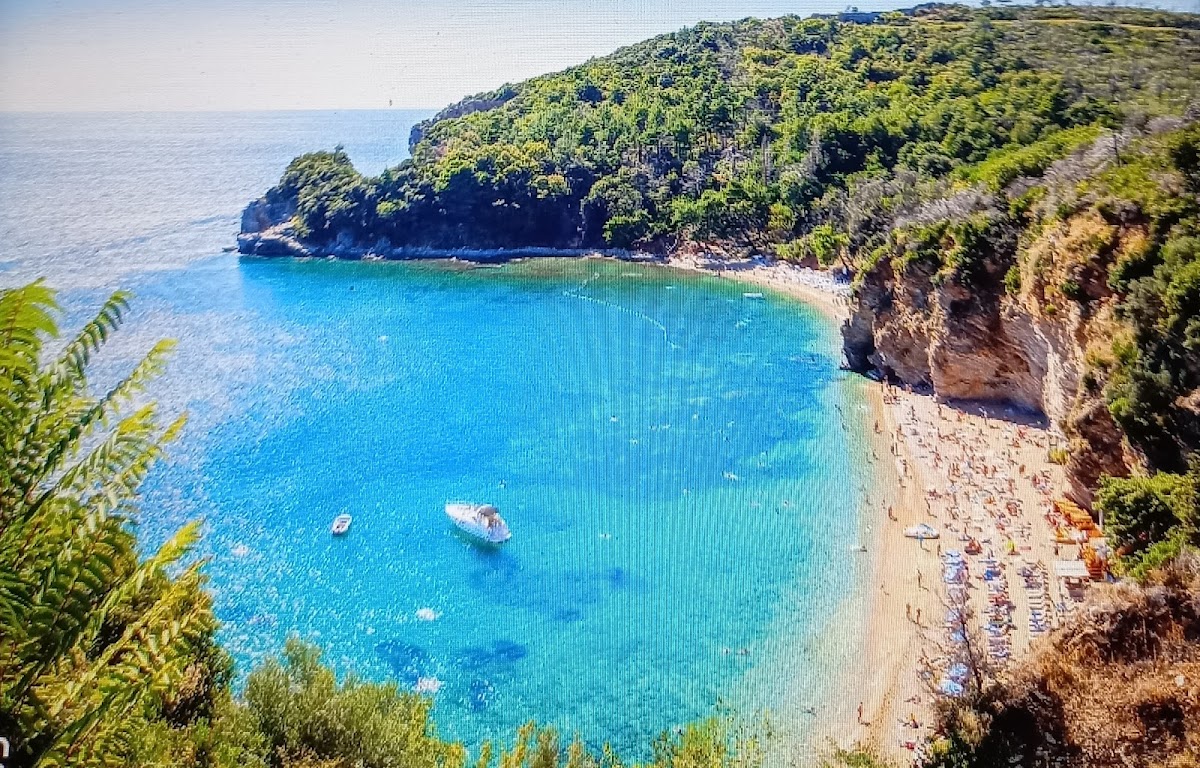
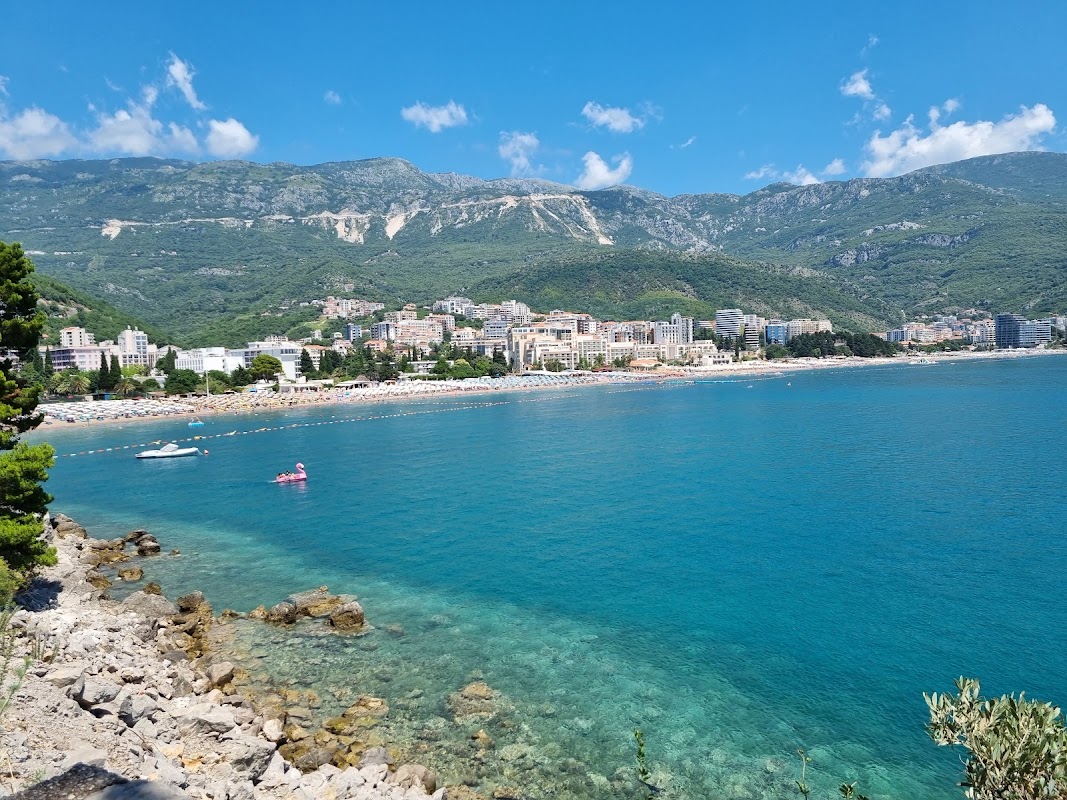
Mogren and Bečići both draw crowds to the Budva Riviera every summer, but they offer fundamentally different days out. Mogren is a pair of intimate pebble coves carved into the cliffs below the Old Town, reached on foot through a short tunnel; Bečići is a broad, two-kilometre sweep of fine pebble that stretches south toward Rafailovići, lined with sun-lounger rows, beach bars, and resort hotels. Pick the cove if atmosphere and scenery top your list; pick the strip if comfort, services, and easy access matter more.
The beach itself
Mogren splits into two connected coves — Mogren I and Mogren II — separated by a short rocky passage you can swim through at low tide. The pebble is small and smooth, the water crystal-clear and deep close to the cliffs, and the surrounding limestone walls give the spot a natural amphitheatre feel. There is no road access; you walk roughly ten minutes along a cliff path from Budva's Old Town walls, which keeps cars (and most crowds) away.
Bečići is on a completely different scale. The beach runs for about 2 km and is wide enough to absorb thousands of visitors without feeling claustrophobic — though in July and August it absolutely fills up. The pebble here is slightly coarser, the water shallower for longer, and the gentle gradient makes it ideal for children and less confident swimmers. Cafés, restaurants, and water-sports operators line the promenade behind the beach.
Sea and swimming
At Mogren the sea depth increases quickly off the pebbles — great for diving off rocks, snorkelling along the cliff base, and that refreshing plunge you want on a hot afternoon. Water temperatures follow the coast-wide pattern: around 22–23 °C in late June, peaking at 25–26 °C in August, staying swimmable into late September.
Bečići's gentler shelf suits families with young children. The wide, shallow entry zone means kids can wade and splash safely, and the calmer microclimate inside the bay keeps wave action low. Both beaches share the same Adriatic clarity — the difference is depth and drama, not quality.
Vibe and crowd
Mogren draws a mix of romantic couples, solo travellers who want to read undisturbed, and locals who make the walk a morning ritual. There are a handful of sunbeds for hire (around EUR 10–15 per bed per day; a set of two with parasol runs EUR 20–30) and one or two small snack bars, but the atmosphere is relaxed and uncommercialised. Noise levels stay low; the main soundtrack is waves against rock.
Bečići pulses with full resort energy. Beach-bar DJ sets start mid-morning on the liveliest stretches; water-skiing, jet-ski hire, and banana-boat rides operate throughout the day. It is one of the few Montenegrin beaches that stays genuinely animated after dark, with several bars running terrace parties into the night. If you want activity, company, and a cocktail within arm's reach, Bečići delivers.
Facilities
Mogren is deliberately low-key: a small changing area, basic toilets, and limited food options. Bring water and snacks for a full day. The cliff walk is scenic but uneven in places — sandals with grip are better than flip-flops.
Bečići has everything: multiple beach bars and restaurants, lounger and parasol rental across the full length, water-sports concessions, showers, changing rooms, and direct bus connections from Budva town (roughly 3 km south). Several four- and five-star hotels sit directly on the beachfront, so guests enjoy step-out-the-door access. Baldahins and cabanas are available from the larger operators at EUR 40–80 per day.
Who each beach suits
Choose **Mogren** if you want a scenic, calm day close to Budva's Old Town and are happy to walk and pack light. It is particularly good in June and September when the cliff path is shaded and the coves are quieter — peak-season crowds do build by 10 am in August, so arrive early or late afternoon.
Choose **Bečići** if you are travelling with children, prefer easy sun-lounger comfort, want water sports on tap, or are based in one of the beachfront hotels. July and August bring the biggest crowds but also the best party atmosphere along the strip. The beach is also a strong choice for anyone visiting Budva on a package deal, as most riviera hotels are within walking distance.