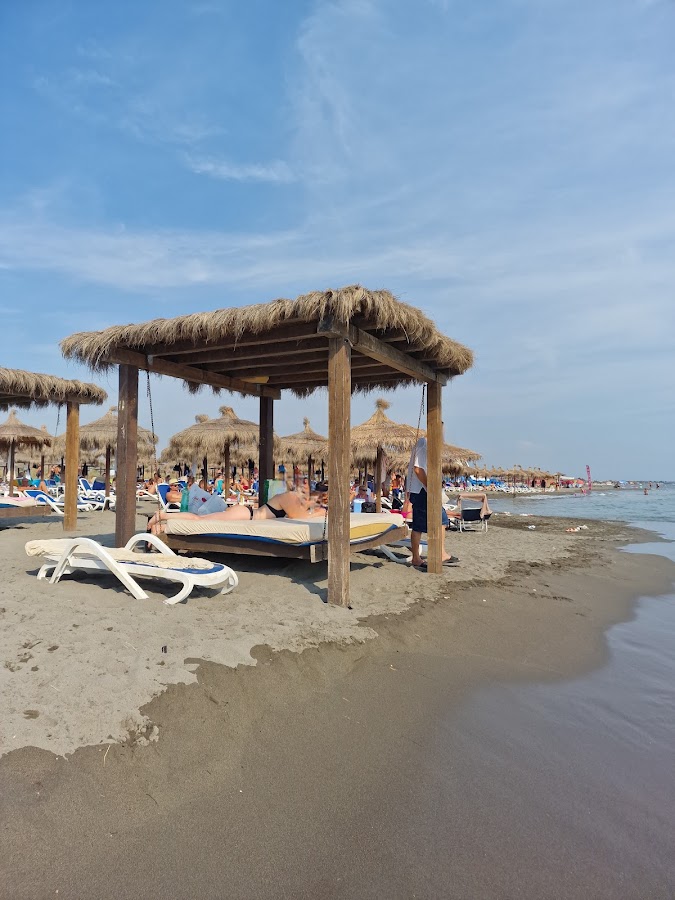
What makes Ada Bojana different
Most Montenegrin beaches sit along a single strip of coast — Ada Bojana does not. This small triangular island, formed where the Bojana River splits into two channels before emptying into the Adriatic, sits about 12 kilometres south of Ulcinj. The island is roughly 1.5 km across and is reached by a short wooden bridge from the Albanian-border road. Three sides mean three very different beach experiences: the Adriatic-facing south shore carries proper surf and wind, the river channels on either side run warmer and shallower, and the interior hides quiet shaded corners.
Ada Bojana is widely known as Montenegro's main naturist destination. Nude sunbathing is the norm on much of the south beach, though it is never compulsory, and clothed visitors are welcome everywhere. If you are not a naturist, you will feel comfortable here — the atmosphere is calm and respectful, far from the packed concrete lidos of Budva.
Getting there
The most practical approach is by car from Ulcinj, about 20 minutes on the road that runs through Velika Plaža. There is a signed turning and a short bridge onto the island. Taxis run from Ulcinj town for roughly EUR 10-15 each way. There is no direct public bus service to the island itself. Day-trippers coming from Budva or Tivat (roughly 90 minutes by car) usually combine Ada Bojana with Ulcinj town and Velika Plaža into a southern-coast day.
The nearest airport is Podgorica, about 80 kilometres away. Tivat airport is roughly 110 kilometres. If you are arriving via Dubrovnik and heading straight for the south, Ada Bojana is conveniently on the way.
The beach bar scene
Ada Bojana's bar and restaurant culture revolves almost entirely around fresh fish. The island has been home to family-run fish restaurants for decades — some of them are the oldest continuously operating seaside restaurants on the Montenegrin coast. Most establishments sit along the river channel side, where moored fishing boats supply the kitchen directly.
Expect grilled fresh catch (sea bass, bream, grey mullet), oysters from the nearby bay, and simple salads. These are not cocktail-heavy beach clubs in the Budva mould. Wine, local beer, and rakija dominate the drinks menus. A full fish meal for two with drinks typically runs EUR 30-60 depending on portion size and catch of the day.
On the open sea side, a handful of beach bars rent sunbeds and serve cold drinks and snacks. Sunbed hire runs EUR 5-10 per day, set prices (two sunbeds plus parasol) EUR 15-25 — noticeably cheaper than equivalent setups in Budva or Bečići. Baldahins and cabanas are not common here; the vibe is relaxed and unstructured.
Best time to visit
Ada Bojana rewards off-peak visitors. In late June and early September the sea temperature is comfortable — around 22-24°C in June, still 24-25°C in early September — crowds are thin, prices are lower, and the atmosphere is genuinely peaceful. July and August bring more visitors but the island never gets as packed as the Budva Riviera; the naturist tradition discourages the type of day-trippers who mainly want a scene to photograph.
The swim season runs from mid-June to late September. August, when sea temperatures peak at 25-26°C, is the warmest but also the busiest. If you want warm water without the crowds, the first two weeks of September are close to ideal.
Wind is a factor. The south-facing beach can pick up afternoon breezes and light surf, which attracts kitesurfers and windsurfers. If you want flat-calm water, head to the river-channel sides, where conditions are sheltered and the water is often a degree or two warmer.
What to bring and what to know
There are no large supermarkets on the island — bring sunscreen, water, and cash. Many smaller bars and some restaurants are cash-only. The island does not have any late-night clubs; the last bars typically close by midnight even in high season.
Mobile coverage is present but can be patchy toward the river-channel back side. The beach is mostly fine sand, which is rare on the Montenegrin coast (most beaches are pebble). Jaz and Bečići near Budva offer some sand, but Ada Bojana's south shore and Velika Plaža to the north form the longest continuous sandy stretch in the country.
Dogs are generally tolerated in quieter areas. The island has no formal parking charges — there is an informal car park by the bridge entrance.
Combining Ada Bojana with the southern coast
Ada Bojana pairs naturally with Velika Plaža, the approximately 13-kilometre beach that stretches north toward Ulcinj. Spend the morning on Ada Bojana, then drive or walk north along the sand to the beach bars on Velika Plaža for lunch. Ulcinj old town, perched on a cliff above Mala Plaža, is worth a visit in the early evening — the sunset from the town walls over the Adriatic is one of the best views on the coast.
For a longer itinerary, Bar municipality's beaches at Sutomore and Čanj are 30-40 minutes north by car, offering a more local, less tourist-heavy experience. The contrast between Ada Bojana's wild river island and Sutomore's family-friendly bay makes for a compelling two-day southern-coast loop.