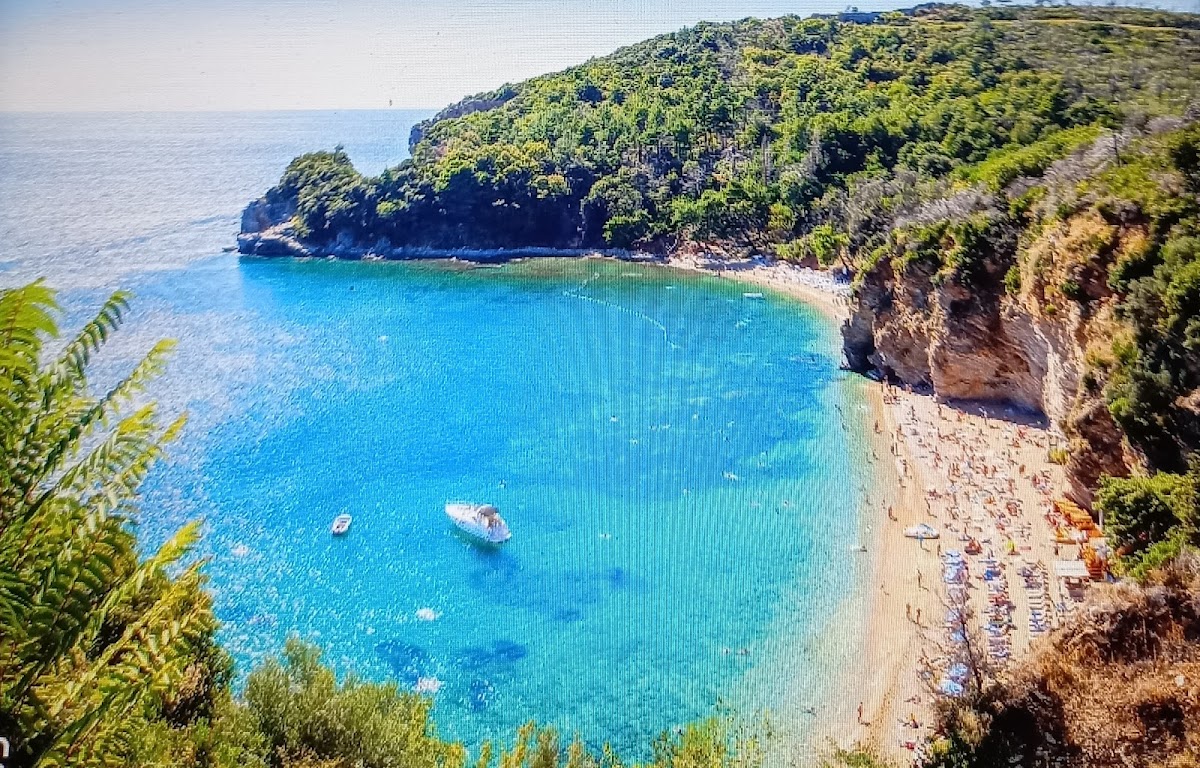
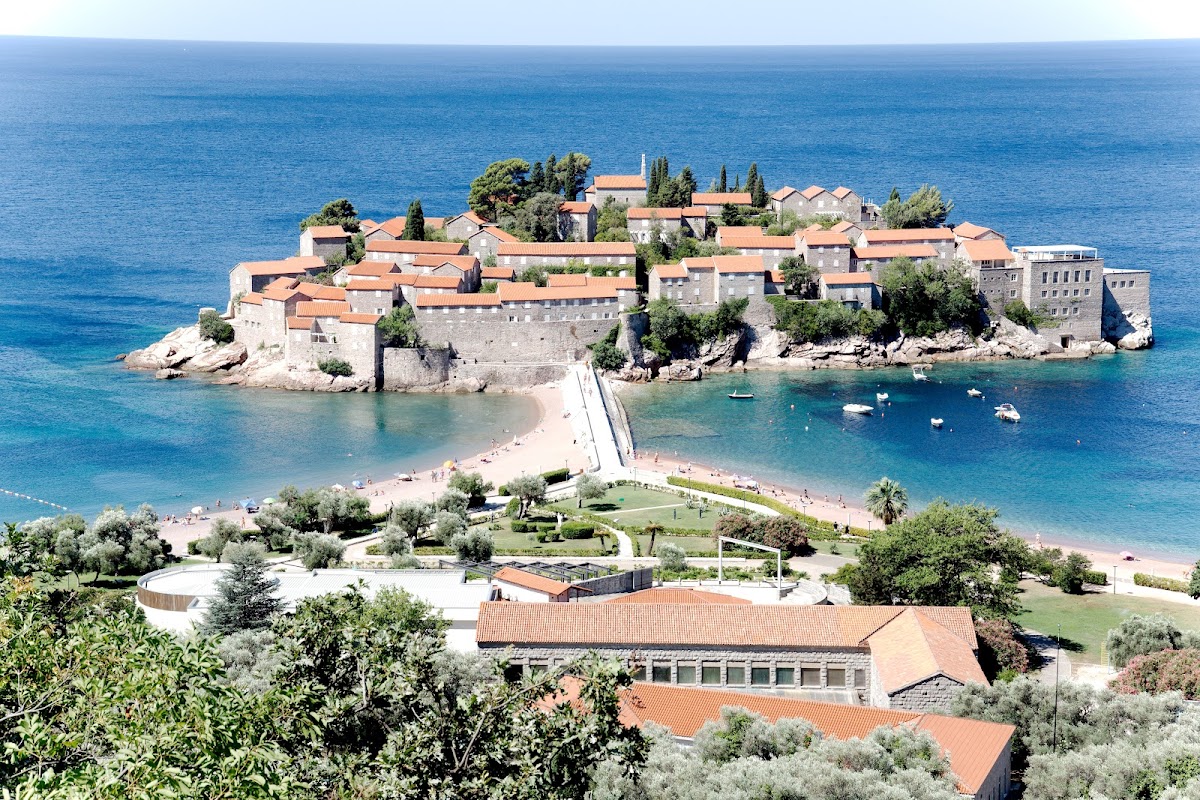
If you are visiting the Budva riviera and your main criteria are visual beauty, clear water, and a sense of being somewhere genuinely special rather than just somewhere developed, the two beaches to know are Mogren and Sveti Stefan. Both are pebble, both have exceptional water clarity, and both have settings that transcend the ordinary Adriatic resort experience. They differ in distance from Budva, in the exact nature of their beauty, and in the practical realities of visiting them.
The visual experience
Sveti Stefan's beach has one of the most recognisable views in the entire Mediterranean: the island-village rising above the causeway, the pink and grey pebble in the foreground, the blue Adriatic in every direction. It is frankly extraordinary, and the first time you see it from the waterline — with Aman's terracotta rooftops directly ahead and the water turning from mint to deep blue — the effect is close to overwhelming. It is the kind of place that makes people stop whatever they are doing and simply stare.
Mogren's visual drama is more intimate. The cliff path, the rock tunnel, the sudden arrival at a small hidden cove with towering limestone behind and translucent water below — it is beautiful in the way that things discovered feel more beautiful. From inside the coves, the perspective is enclosed and personal rather than panoramic.
Water quality
Both beaches have exceptional water. Mogren's water is notably clear — a vivid blue-green over pale rock, dropping to good swimming depth quickly. Sveti Stefan's is if anything even more dramatic in colour, dark and cold and transparent, the kind of water that makes the underwater world visible from the surface. Both are among the best on the riviera for pure water quality.
Practicalities
Mogren wins on ease. The cliff path walk from Budva's Old Town takes 10–15 minutes, costs nothing, and requires no planning. You can be swimming at Mogren within half an hour of checking into any Budva hotel. The beach fills up in peak season but there is no access issue.
Sveti Stefan requires planning. The beach is 6 km from Budva by road. The car park is small. The most photographed southern section is entirely within the Aman resort's perimeter — non-guests are excluded regardless of price unless they arrange a day pass in advance. The public northern section is good but limited in space. You will almost certainly need a taxi.
Atmosphere
Mogren has a deliberately quieter register — the access walk keeps it from the mass tourist flow, and the beach bars are subdued. Sveti Stefan draws an unusual crowd: local families on the public section, Aman guests glimpsed behind the perimeter, day-trippers who came specifically to look at the island, Instagram photographers. The public beach can feel slightly ambiguous in identity.
Who each suits
Mogren is the beach for those staying in Budva who want beautiful water and a calmer atmosphere without organising a taxi. Sveti Stefan is for those who want to see and swim at one of Montenegro's definitive landscapes, and who are willing to plan the visit and arrive early.