Ulcinj is Montenegro's southernmost coastal town and arguably its most distinctive, sitting close to the Albanian border with a character shaped by Ottoman heritage, an Albanian-speaking majority, and some of the best beaches in the country. Its two main beaches could scarcely be more different: Velika Plaža is a 13-kilometre giant, one of the longest sandy beaches in the Adriatic; Mala Plaža is a 350-metre cove directly beneath the old town walls. Choosing between them depends almost entirely on what kind of beach day you want.
The sand and sea
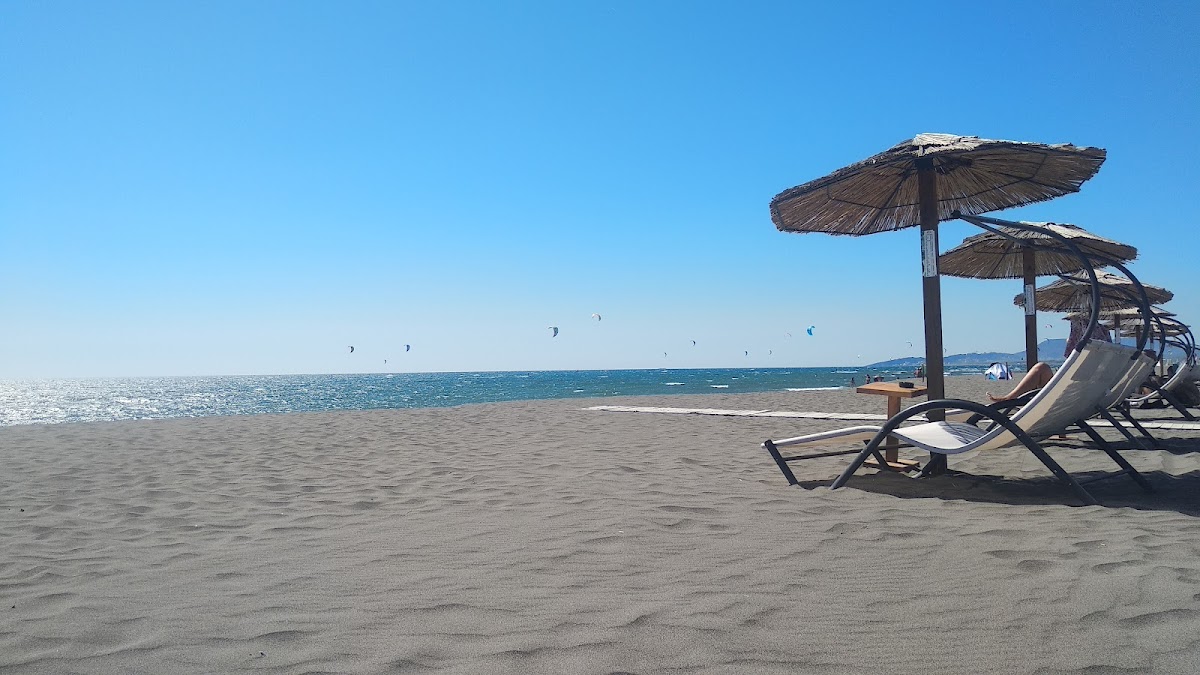
Both beaches are sandy — rare on the Montenegrin coast, which tends towards pebble — but the sand is not the same. Velika Plaža's sand is fine, dark gold, and mineral-rich from the Bojana River delta that feeds it. It is firm underfoot and stretches into the distance in both directions with the hypnotic regularity of a North African beach. The water is shallow for a long way out, warming quickly by July, and the gentle south-facing exposure creates a small but consistent surf that makes it popular for kitesurfing and windsurfing.
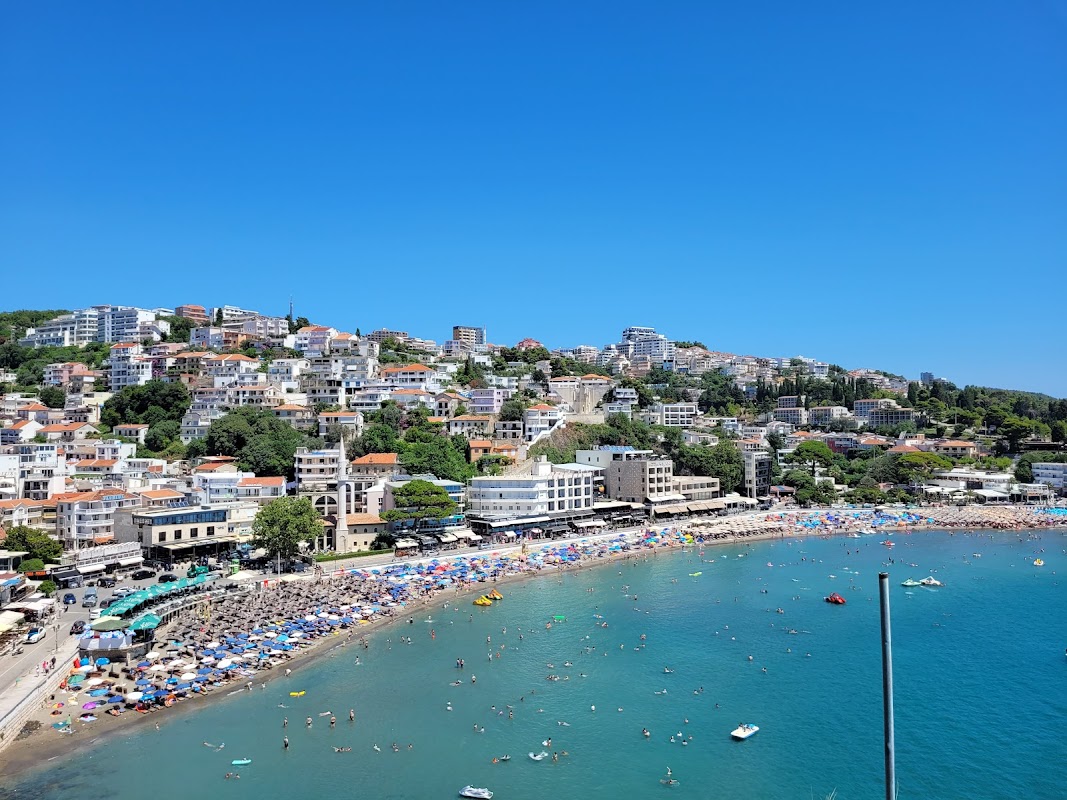
Mala Plaža's sand is coarser, mixed with gravel near the waterline, and the bay shelves a little more steeply — you're swimming properly within a few strokes. The water turns a deep photogenic turquoise, beautifully framed by the rocky headlands on either side. The Old Town rising directly above the beach adds a visual drama that Velika Plaža, open and flat on all sides, cannot match.
Atmosphere and crowds
Velika Plaža's length is its defining social feature. In high August, when Mala Plaža is packed elbow-to-elbow, you can walk ten minutes from the nearest beach bar on Velika Plaža and find virtually empty sand. It attracts a different visitor too: kitesurfers at the southern end near Ada Bojana, naturists in the designated northern zone, and large family groups who set up semi-permanent camps for the week. It is expansive, unhurried, and somewhat raw.
Mala Plaža is the town beach in every sense — immediately accessible, buzzing, and social. The promenade behind it runs continuously with cafés, ice cream stands, seafood restaurants, and the kind of competitive Balkan beach-going energy that involves music at audible volume and jet skis cutting arcs just outside the swim zone. It has a young, lively, international-within-the-Balkans crowd, and the adjacency to Ulcinj's excellent old town means beach and dinner are a five-minute walk apart.
Facilities and beach bars
Mala Plaža wins on infrastructure: sun-lounger concessions, water-sports rentals, a row of restaurants, and a beachside promenade create the full resort experience within 350 metres. Velika Plaža is more scattered — a few konobas, some sun-lounger areas near the access roads, and a water-sports hub at the Ada Bojana end, but long stretches with nothing at all. You need a car (or a long walk) to reach the far ends of Velika Plaža from Ulcinj.
Who each suits
Velika Plaža is the obvious choice for anyone who hates crowds, for water-sports enthusiasts, for naturists, and for those who want the experience of a beach that actually ends over the horizon. It rewards early risers and people happy to self-cater.
Mala Plaža suits travellers who want the beach to be part of a broader town experience — morning swim, coffee on the promenade, afternoon gelato, evening dinner in the old town. It is better for solo travellers, couples, and anyone who came to Ulcinj partly for the food and nightlife and not only for the sea.