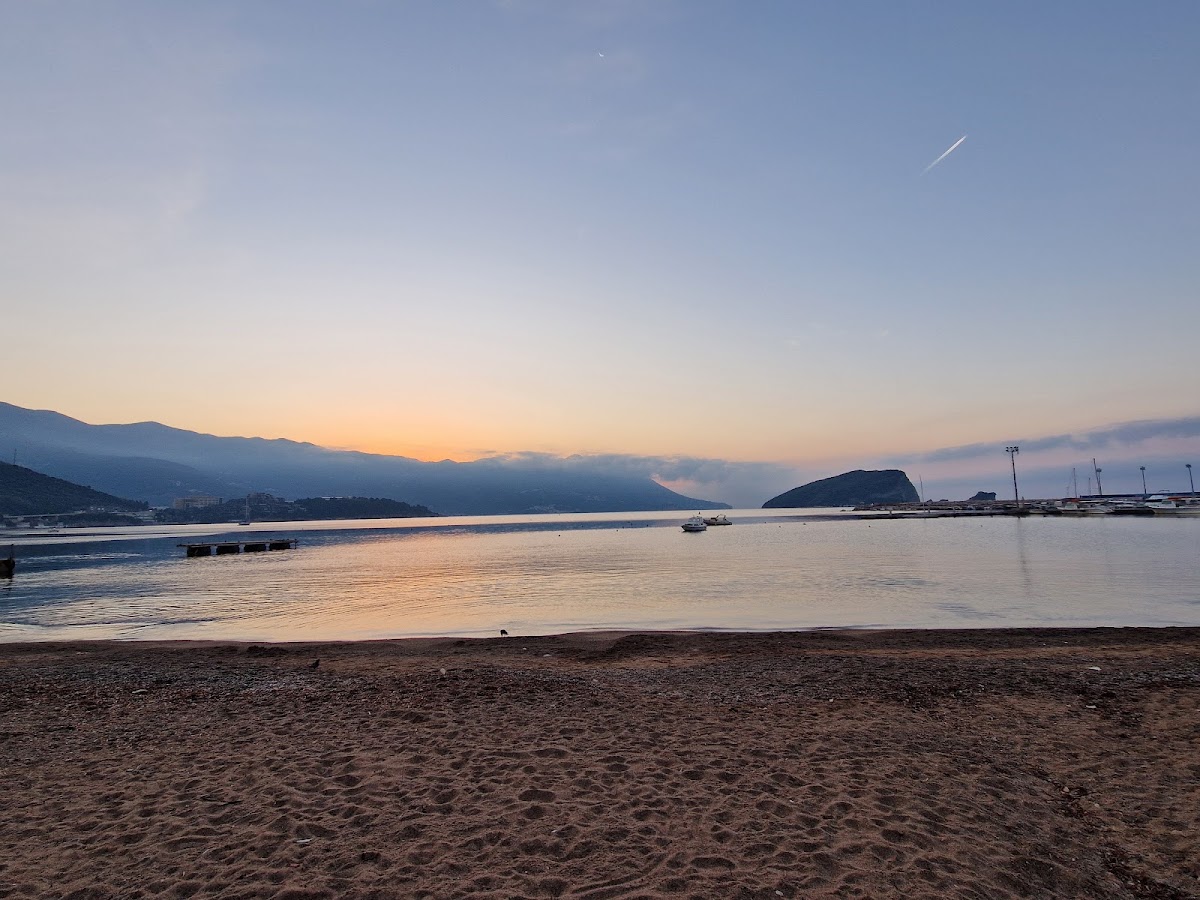
The Budva geography
Budva's coastline is not one long beach but a series of distinct bays separated by rocky headlands and small peninsulas. The old town — a walled Venetian city rebuilt after a catastrophic 1979 earthquake — sits on its own small peninsula and anchors everything. From here, beaches extend north towards Jaz and south along the so-called Budva Riviera, past Bečići, Rafailovići, and Sveti Stefan to Petrovac. Understanding this geography means you'll stop trying to walk between beaches and start using taxis or the coastal road instead.
Slovenska Plaža and the old town beach
Slovenska Plaža runs directly north from the old town walls — about 1.5 kilometres of pebble-and-sand beach that is the most central option in the city. This is where Budva's beach bar density is highest: Coral, Trocadero, Dukley Beach, Aquarius, and a dozen others jostle for prime frontage. Most operate on the sunbed-plus-minimum-spend model, typically €10–20 per person in peak July-August. If you just want to swim for free, the rocky platforms at the base of the old town walls are public and always accessible.
The old town beach itself (locally called Stari Grad plaža) wraps the seaward walls. It is tiny — maybe 100 metres — but the setting is extraordinary: amber-lit medieval stone rising directly from the sea, with Fort Citadela visible above. Get here before 9 a.m. in summer if you want a spot.
Mogren Beach
A ten-minute walk south of the old town along a clifftop path, Mogren is Budva's most beautiful beach and also one of its most reliably crowded. It is actually two beaches — Mogren I and Mogren II — connected through a short rock tunnel. The approach path offers some of the best views on the coast. Both beaches are pebble with some sand, with organised sunbed areas and a beach bar at each. The water here is deeper and clearer than Slovenska, with good snorkelling around the rocks on the right side of Mogren II.
Jaz Beach
Five kilometres northwest of Budva, Jaz is one of the largest beaches in Montenegro — about two kilometres long, reasonably sandy, and backed by a flat plain that has hosted concerts (U2 and Rolling Stones have both played here). On any given summer day it accommodates an extraordinary number of people without feeling as oppressive as it sounds. Beach bars and clubs along Jaz include some of the biggest in the country, with DJ lineups rivalling the Croatian island scene. Parking is available but premium; the beach is easily reached by taxi or the summer coastal minibuses.
Bečići and Rafailovići
Just south of Budva proper, Bečići and Rafailovići form a near-continuous crescent of beach about two kilometres long, backed by a dense strip of hotels. Bečići won a European Blue Flag years ago and trades on that reputation; the beach is well-maintained if tightly packed. The bar and restaurant scene here is slightly more relaxed and family-oriented than Slovenska Plaža — good for lunch, less intense on the nightlife side. Rafailovići is the quieter southern half, with more apartments-in-family-homes accommodation behind it.
Sveti Stefan
Twelve kilometres south of Budva, the islet of Sveti Stefan — an entire medieval village converted into a luxury hotel — is the definitive image of Montenegro's coast. The Aman Sveti Stefan resort controls the island itself and the adjacent Miločer Beach (a former royal park), but the public beach on the mainland side of the causeway is free and spectacular: pinkish pebble, turquoise shallows, the island itself as a backdrop. The beach bar here is run independently and is overpriced by local standards, but the view is the point.
Practical considerations
Budva in July and August is extremely busy. The old town and Slovenska Plaža specifically can feel overwhelmed on hot weekends when day-trippers arrive from Podgorica. If crowd avoidance matters, aim for June (sea temperature around 22–23°C, manageable) or September (still warm, dramatically quieter). Most beach bars operate from late May to early October, with the full season June–September. Parking anywhere near the beaches costs €1–2/hour; arriving by taxi from your accommodation is usually the better call.