Why Ulcinj stands apart
Most visitors to Montenegro default to Budva or Kotor, and Ulcinj — 100 kilometres south, pressed against the Albanian border — tends to get overlooked. That is a mistake. The city occupies a rocky promontory topped by a medieval Venetian old town, and below it the coast unravels into a succession of beaches that grow progressively wilder and longer as you head south. The light here is different too: slightly hazier, more golden, Aegean in feel rather than the polished Adriatic gloss of the Budva Riviera.
Mala Plaža (Small Beach)
Directly below the old town walls, Mala Plaža is Ulcinj's most atmospheric spot. The beach itself is narrow — maybe 30 metres at its widest — and fringed by a promenade lined with cafes and small beach bars serving strong coffee, rakija, and fresh-squeezed juice. It fills up fast in July and August, but the backdrop of the illuminated fortress at dusk makes it unmissable. Several operators here rent sunbeds and umbrellas; expect to pay €5–8 per piece in peak season. The water is calm and clear enough to see the bottom.
Liman Beach and the hotel strip
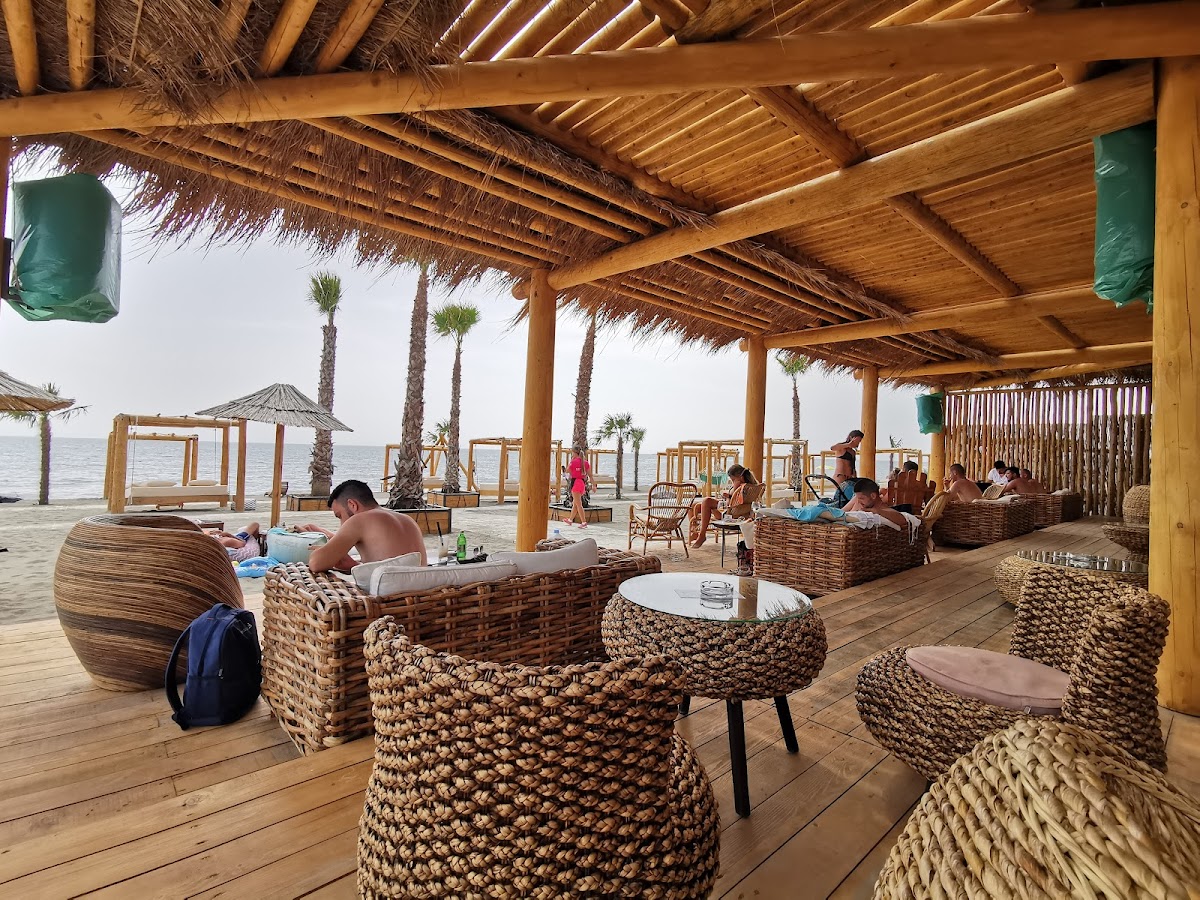
Walking north from the old town, Liman Beach stretches past the Hotel Albatros and a cluster of Soviet-era resort blocks that are slowly being renovated into something more contemporary. The beach bars here — Horizon, Captain's, and a few others — are properly equipped: full kitchens, cocktail menus, DJ sets starting around 6 p.m. in summer. Sunbed hire tends to be included with a minimum food-and-drink spend (typically €10–15 per person), which is actually decent value if you're eating lunch there anyway.
Velika Plaža: the main event
At 13 kilometres, Velika Plaža (Great Beach) is the longest beach in the Adriatic. It begins just south of the Bojana River estuary and runs to the Ana river mouth — a continuous strip of fine, dark-golden sand backed by low dunes and, increasingly, purpose-built beach clubs. The northern end is more developed, with places like Copacabana Beach Bar and Maxx Beach offering everything from waterskiing to evening parties. The southern end thins out to near-emptiness; families and couples who want space to themselves gravitate there, often setting up without paying for anything.
The sand here is notably finer than the coarse-grained or pebbly beaches further north. Shallow entry and very gentle wave action make it superb for children. Read our separate deep-dive on Velika Plaža for a full bar-by-bar breakdown.
Ada Bojana
At the southern tip of Velika Plaža, the Bojana River splits around a small triangular island to form Ada Bojana. It is the most relaxed stretch of beach in all of Montenegro — officially a naturist area on part of the island, though the textile sections are larger and no one enforces anything strictly. A handful of fishermen's restaurants (riblji restoran) operate here year-round, serving caught-that-morning sea bass, mullet, and eel from the river. The Ada Bojana Hotel cluster provides bungalow accommodation if you want to base yourself here. Getting here requires either driving down Velika Plaža (a sandy track — 4WD not required but advisable) or taking the small ferry from the island's northern tip.
What to eat and drink
Ulcinj has a meaningful Albanian population and the food reflects that: more lamb, more börek, more Turkish coffee, and grilled meats alongside the Montenegrin seafood staples. On the promenade near Mala Plaža, look for places serving Ulcinj-style grilled fish — whole branzino or dorada over charcoal, served with blitva (Swiss chard and potato) and a carafe of local white wine. The Albanian-run konobas (taverns) tend to be cheaper than their Budva counterparts for similar or better quality.
Beach bar drinks run €3–5 for a domestic beer, €6–10 for cocktails. Freshly pressed pomegranate juice is an Ulcinj speciality and costs around €3–4.
Practical tips
Ulcinj is about a 30-minute drive south of Bar along a coastal road that occasionally requires patience behind trucks. The town itself is walkable; Velika Plaža requires a car, scooter, or the local minibus that runs from the main square in July and August. Parking on the beach strip is possible but chaotic in high season — go early or late. Peak crowds hit in late July and the first two weeks of August, when the town fills with visitors from Serbia, Kosovo, and Albania. The shoulder months — late May to mid-June and September — offer the best combination of warm water, manageable crowds, and full bar and restaurant service.