Arriving at Velika Plaža
The most common approach is by car along the D1 coastal road from Ulcinj town, which runs parallel to the beach from the north. The main access points are marked with signs, but several of the bars are visible from the road while others require a short walk down sandy tracks. There is no boardwalk running the full length; the beach itself is the thoroughfare. In July and August, a minibus runs from Ulcinj's main square (Trg Besa) to the most popular access points roughly every 30–45 minutes; ask at the bus station for the current schedule.
The northern end: most organised, most crowded
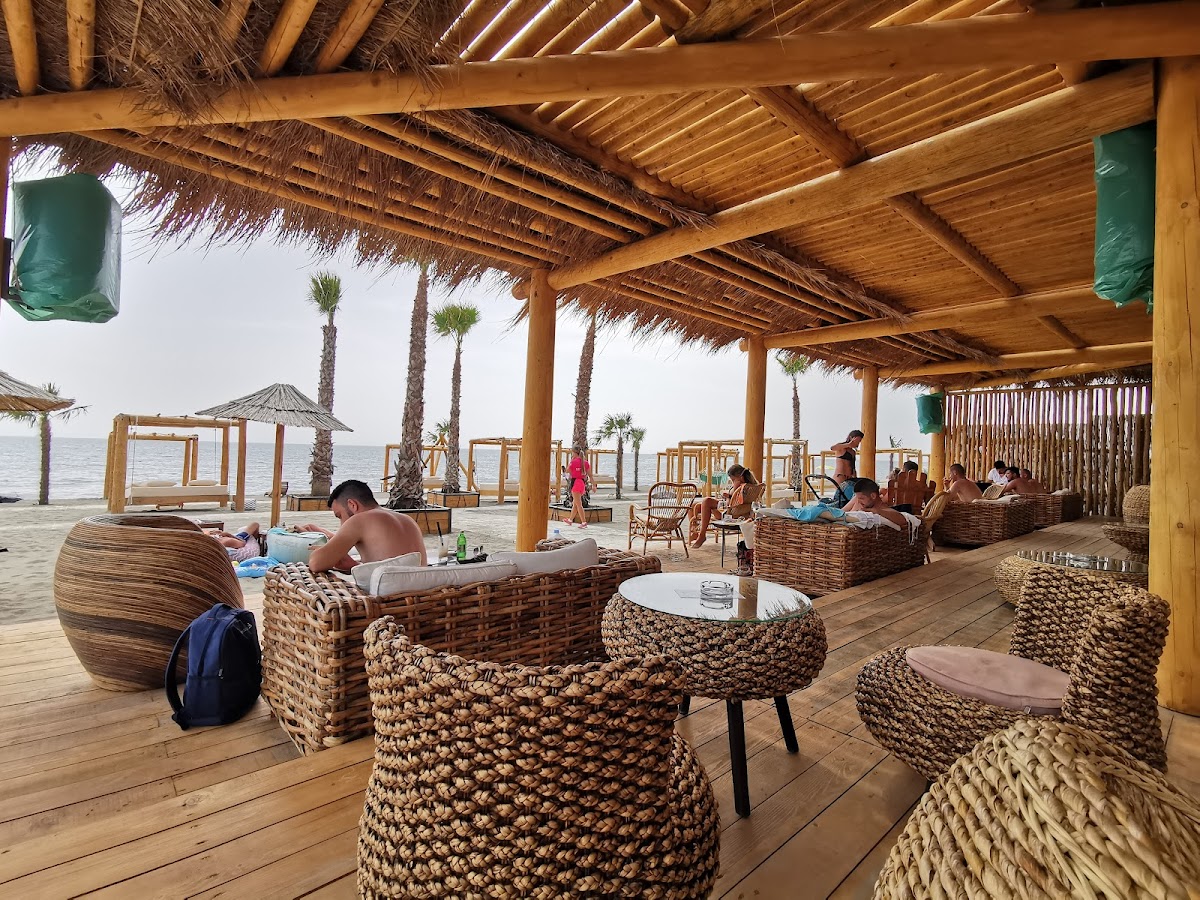
The first beach bars you reach coming from Ulcinj are the most developed. Copacabana Beach Bar is the landmark: a large, well-organised operation with sunbeds, baldahins, a full kitchen, a bar, and regular music events. The signage is clear and the staff speak enough English to navigate a first visit. Prices here are fair by Montenegrin standards — sunbeds around €5–7, baldahins around €30 per day, a plate of grilled fish for €12–16. There are several competing bars within 200 metres; Horizon Beach and Maxx Beach are the other main names. All three have parking areas that fill up fast after 10 a.m.
The middle section: local and relaxed
Walking or driving south from the main cluster, the beach bars thin out and the character changes. You are now in Montenegrin family-holiday territory: older bar buildings, simpler menus (grilled meat alongside fish, house wine sold by the carafe), fewer English-speaking staff. This is not a criticism — the food is often better and cheaper here, and the atmosphere is more genuinely local. Look for small hand-painted signs pointing off the road. These middle-section bars rarely appear on booking platforms; just arrive, find a sunbed, and order.
The southern end: near-empty
Beyond a certain point, the bars disappear entirely and the beach widens and empties. This is where couples, solo travellers, and anyone craving solitude head. There is nothing here: no shade, no facilities, no toilets. Bring water, sunscreen, and shade if you want to come here. The payoff is having a section of one of Europe's finest beaches entirely to yourself. Follow the sandy track (any small car can manage it if you stay on the hard-packed part) until the road effectively ends.
Ada Bojana: the final point
The beach track eventually arrives at the small settlement around Ada Bojana island. Cross the little bridge or take the boat (a few euros) and you are on the island — sandy beaches on both sides, river on one, open sea on the other. The fishermen's restaurants here are the best reason to make the full journey: they serve what was caught that morning, grilled simply, at prices that feel like a different country.
What to bring
Sunscreen (expensive to buy on the beach), cash (smaller bars often have no card facilities), water shoes (useful for the occasional rocky section), and more water than you think you need — the southern end has no shade and the sun reflects off the sand intensely. A beach bag that closes keeps the fine sand manageable. A windbreak or lightweight shade structure is worthwhile if you plan a full day at the quieter end of the beach.
Navigating without a car
The minibus is reliable for reaching the northern bars; beyond that, you will need a taxi or a scooter. Taxis from Ulcinj town to Ada Bojana cost around €8–12; book the return in advance or ask the driver to wait. Scooters rent for €25–35 per day in Ulcinj town and are the most practical way to explore the full beach length at your own pace.