Why Herceg Novi deserves more attention
Most Montenegro beach itineraries put Budva at the centre, fan out to Ulcinj for the sand, and leave Herceg Novi as an afternoon stroll. That's a mistake. The town sits where the Adriatic meets the Bay of Kotor, giving it some of the clearest water on the coast and a microclimate softened by the Orjen mountain range behind it. The result is a lush, fort-topped town with a relaxed beach scene that fills up later in summer and empties out earlier in September — meaning you almost always find a sunbed.
Getting here is straightforward. Tivat Airport is roughly 30 km by road (allow 40 minutes), Dubrovnik Airport is about 55 km north across the Croatian border, and Podgorica Airport is around 90 km via the mountain road. Buses connect to Budva, Kotor, and Bar throughout the day.
The beaches
### Žanjic
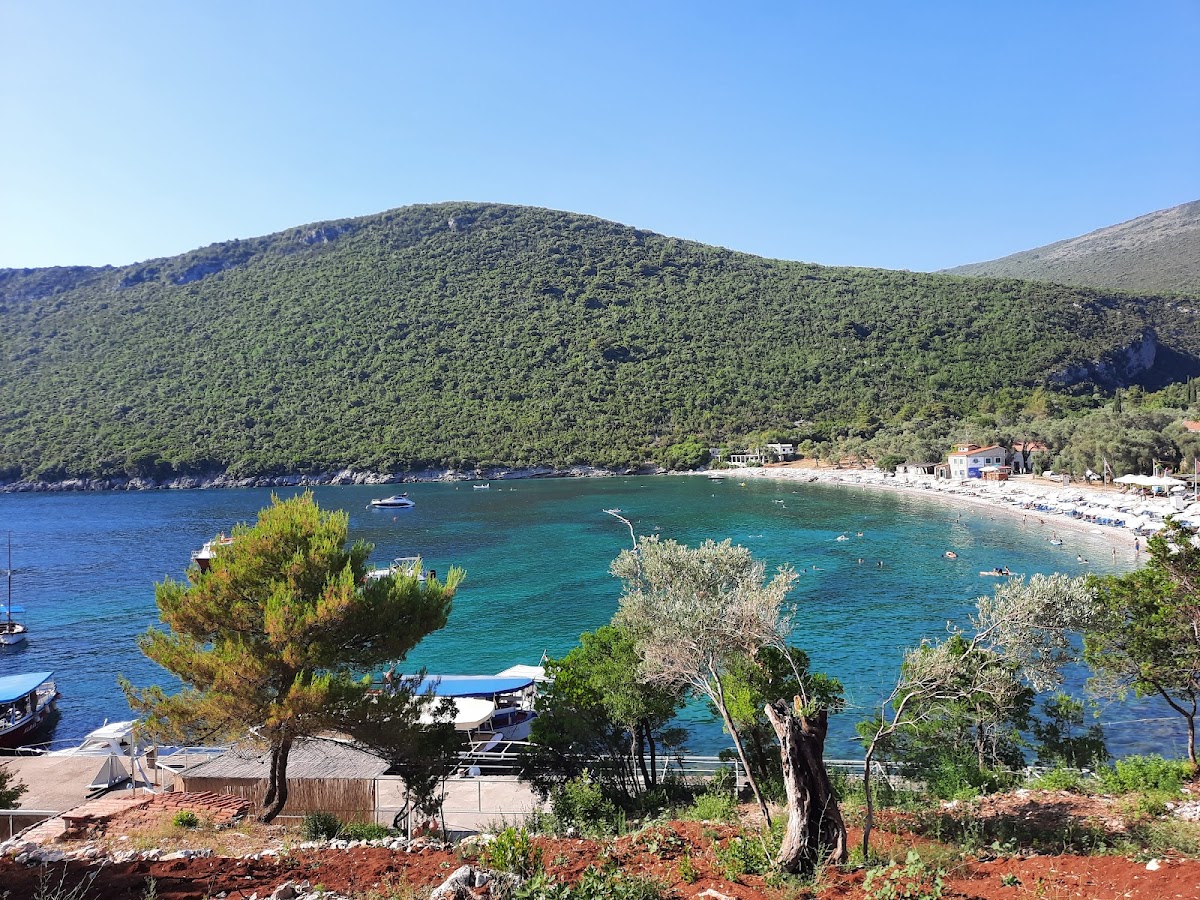
Žanjic is the star of the Herceg Novi beach scene. It sits on the Luštica Peninsula, across the bay from the town centre, and is reached by a short taxi-boat ride or a winding road drive. The pebble-and-rock shore is backed by pines, the water is a deep turquoise, and the beach bar here serves grilled seafood and cocktails from late morning until sunset. Sunbeds typically run EUR 5–12 per piece; a shaded set of two with a parasol is usually EUR 15–25. Arrive before 10 am in July and August to secure a good spot.
### Igalo
Igalo is the town immediately west of Herceg Novi, famous for its therapeutic mud (peloid) and the Institute for Physical Medicine that has attracted health tourists for decades. The beach itself is a wide, calm pebble strip on the sheltered inner bay. The water is shallower and warmer than the open coast — ideal for children and anyone who prefers gentle swimming. Several beach bars and a couple of café-restaurants line the promenade.
### Njivice
Njivice is a small settlement a few kilometres east of the town centre, accessible by the coastal road. The beach is narrower and less developed, popular with locals and longer-stay visitors who want an uncrowded alternative. Water sports rental — kayaks, stand-up paddleboards, pedal boats — is available in high season.
### Town beaches (Topla and Škvер)
Right in the town itself, the Topla and Škvер areas have concrete and rock platforms with ladders into the sea, common to the Adriatic. They're convenient if you're based in the old town, though not the place to spread a towel. Several café-bars face the water here and fill up for sunset.
Beach bar culture in Herceg Novi
The beach bar scene here is a notch calmer than Budva or Jaz. You'll find the full range — cocktail menus, grilled fish, fresh local beer — but the volume stays lower and the crowds are a mix of Montenegrin families, regional visitors, and a growing number of Western Europeans who have discovered that this corner of the bay offers exceptional value.
Pricing follows the national range: a sunbed is EUR 5–15, a parasol set (two sunbeds plus parasol) EUR 15–30, and a baldahin or cabana EUR 40–100 depending on the beach and operator. Food and drinks at beach bars tend to be modestly priced compared to equivalent spots in Budva — a grilled fish plate EUR 12–20, a cocktail EUR 6–10.
Best time to visit
The swim season runs from mid-June to late September. Sea temperatures peak in August at around 25–26 °C — warm enough to stay in for hours. July and August are the busiest months; Žanjic in particular fills up on weekends. June and September offer the best trade-off: the water is still comfortable (22–24 °C in June, cooling gradually through September) and the beaches are noticeably quieter. If you're travelling with children or prefer a calm atmosphere, the first two weeks of June or the whole of September are the sweet spot.
Herceg Novi also retains character outside the peak weeks. The old town's staircase streets, fortresses, and mimosa-lined squares are worth exploring even if you just do a morning swim and spend the afternoon wandering.
Getting between beaches
Taxi-boats run between the town harbour and Žanjic and the Luštica Peninsula beaches throughout the day in July and August — the crossing takes around 15–20 minutes and costs a few euros each way. Local buses cover Igalo and Njivice. Renting a scooter or car gives you the most flexibility for reaching the quieter coves.
Practical notes
- Most beach bars are cash-friendly but larger ones now accept cards. - Sunscreen and water are available at kiosks on main beaches but are cheaper from town supermarkets. - The coastal promenade (Šetalište Petra I Petrovića) connects the old town to Igalo and makes for an excellent early-morning or evening walk before and after a beach day. - Montenegro uses the euro (EUR); no currency exchange needed for EU visitors.