The geology problem
Montenegro's coast is almost entirely limestone karst — the same rock that produces the dramatic cliffs and sea caves that make the scenery so beautiful, but which erodes into rock and coarse pebble rather than fine sand. What passes for 'sand' at many Montenegrin beaches is actually fine gravel: uncomfortable underfoot without water shoes, and not what most visitors imagine when they book a beach holiday. The truly sandy beaches in Montenegro are relatively few, formed either at river mouths (where sediment deposits) or in sheltered bays where wave action has had centuries to grind pebble to a finer consistency.
Velika Plaža, Ulcinj: the benchmark
There is no serious debate about which beach in Montenegro has the best sand. Velika Plaža's 13 kilometres are composed of fine, dark-golden sand deposited over centuries at the mouth of the Bojana River and refined by the prevailing southerly swell. You can walk barefoot for its entire length. The sand is compact enough to set up chairs and parasols without sinking but fine enough to slip between your fingers. If sand quality is the deciding factor in your coastal itinerary, Velika Plaža is the destination.
Jaz Beach, Budva Riviera
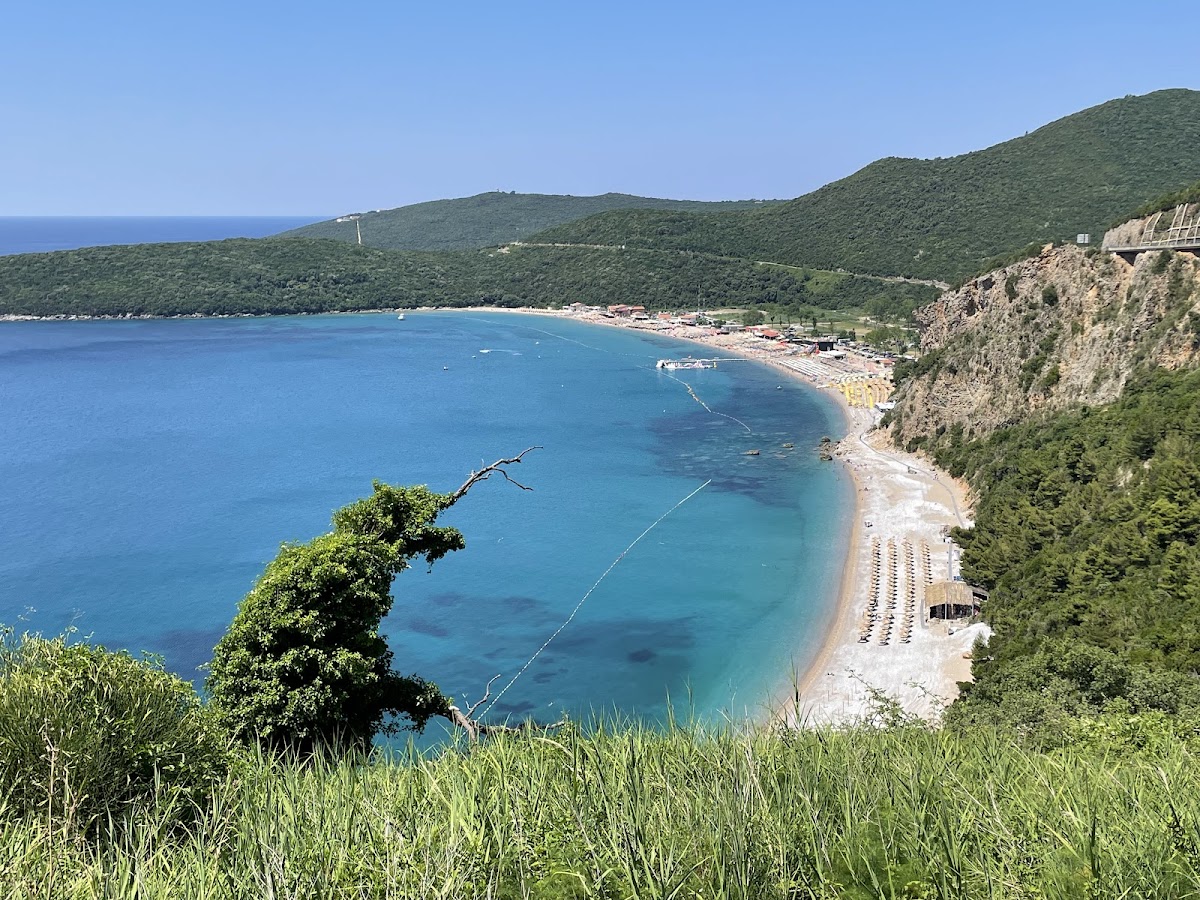
Jaz Beach is significantly sandier than most other Budva-area beaches — the central section has a genuine sand-and-pebble mix that feels acceptable underfoot without shoes. The northern part of Jaz is sandier than the southern end. It is not in the same category as Velika Plaža, but within the Budva area it is the best option for sand lovers. Early morning, before the crowds arrive, Jaz has a pleasant, wide-open quality.
Bečići, Budva Riviera
Bečići has marketing that calls it one of the sandier beaches in the region, and compared to pure-pebble alternatives like Mogren or the old town beach, it is. The sand-to-pebble ratio varies by section and shifts each season depending on winter storm patterns. The northern end tends to be finer; the southern (Rafailovići) end is coarser. Water shoes are still advisable for the sections closer to the water, where the wave action deposits pebble.
Ada Bojana, Ulcinj
The island beach at Ada Bojana — a 3-kilometre loop of sand around the triangular island — has sand comparable in quality to Velika Plaža. It benefits from the same river-sediment geology. Being an island with limited vehicle access, it is always less crowded than the main beach. The river-side beaches (facing the Bojana channel rather than the open sea) are sheltered, warm, and remarkably peaceful.
What about the beaches in the Bay of Kotor?
The bay's beaches are almost entirely pebble or rock. The enclosed geography and limestone geology produce no significant sediment deposits. A few beaches have had sand imported — Tivat's Ponta Beach Club has added sand fill — but these are managed private beaches. If sand is your priority, the bay is not the right destination; come here for the scenery and the food instead.
Practical tips for pebble beaches
Water shoes (aqua shoes, €5–15 in any local sports shop or beach market) transform a pebble beach experience. They allow entry and exit without pain and let you explore rocky sections that are otherwise uncomfortable. A few centimetres of pebble beach below your towel is also firmer and actually more comfortable for lying than deep sand once you've levelled the stones under you — a trick locals use without thinking. Don't let the pebble situation put you off: the water clarity and colour at Montenegro's rocky beaches can be extraordinary.