Porto Montenegro: the transformation
A decade ago, Tivat was best known for its airport and its rusting naval shipyard. Then a Canadian billionaire bought the shipyard and turned it into Porto Montenegro — a 630-berth superyacht marina surrounded by luxury apartments, designer boutiques, and waterfront restaurants. It opened fully around 2014 and has been expanding ever since. The marina now has its own beach club (Ponta Beach Club, directly adjacent to the main promenade), a nautical museum, and a walking and cycling path that runs the length of the development.
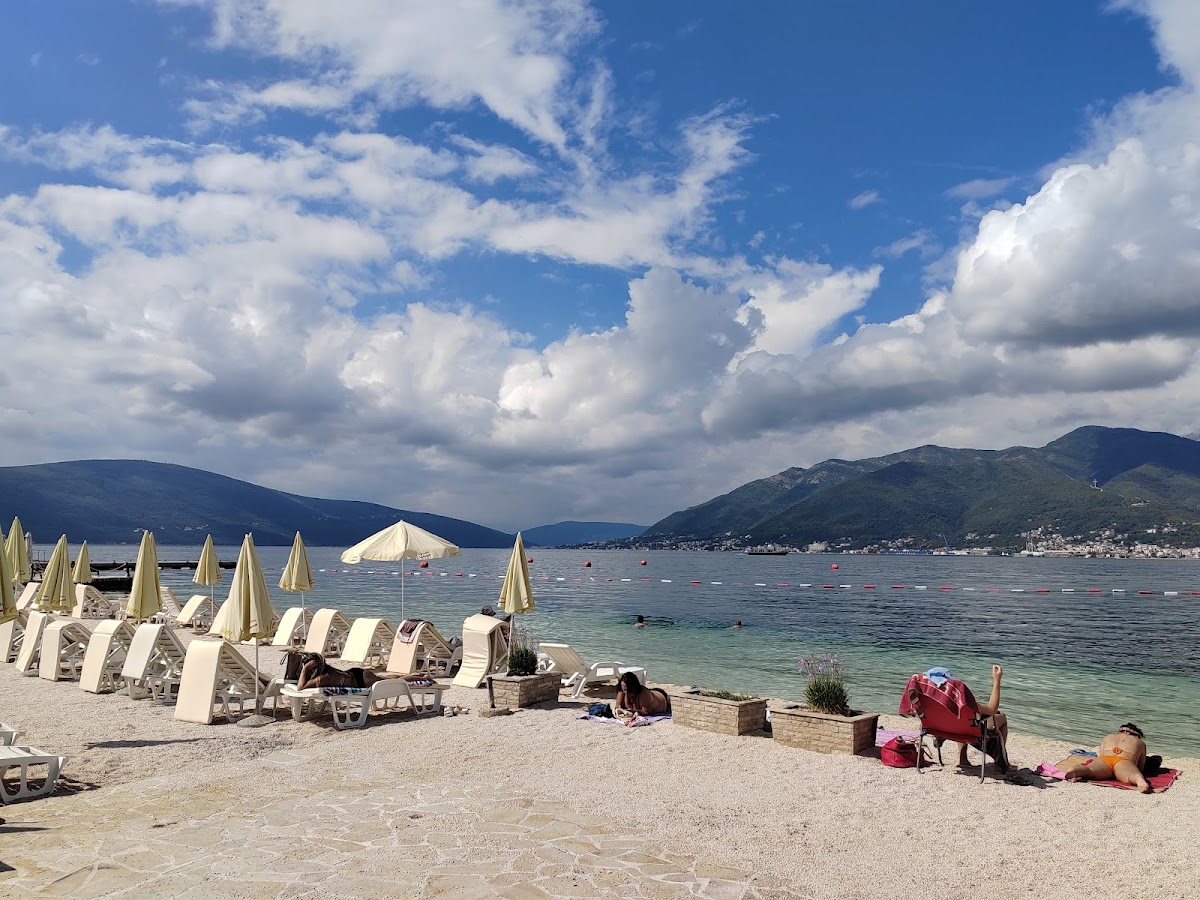
Ponta Beach is the flagship: a managed beach with sunbeds, umbrellas, a full-service bar, and the kind of clientele that arrives by tender from boats too large to tie up elsewhere. Sunbed hire runs €15–25 per piece in peak season; cocktails are priced accordingly (€10–15). But the atmosphere is excellent, the music is curated rather than aggressive, and the mountain backdrop — Vrmac on one side, Lovćen in the distance — is genuinely spectacular.
Beyond the marina
The Porto Montenegro development occupies only a slice of the Tivat coastline. Following the road north past the marina, the character changes quickly. The beaches around Župa and Đuraševići are rougher, cheaper, and significantly less crowded — families with children, locals on day trips, the occasional campervan. The sand-and-pebble mix is less manicured than Ponta but the water is the same colour.
South of Porto Montenegro, the road curves towards the small settlement of Čelovina, where a series of cafes and unpretentious beach bars operate from converted boathouses. Come early in the morning and you may well be the only person there; the view back across the bay to Kotor is worth the minor journey.
The Tivat peninsula and Luštica
Tivat airport sits on a finger of land that points into the bay; south of the runway, the Luštica peninsula begins. This largely rural area is undergoing its own development wave — the Lustica Bay resort has been under construction for several years, with beaches, hotel, and a golf course forming a gated-feeling enclave. The public beaches on Luštica's outer coast (facing the open sea rather than the bay) are some of the least-visited on the whole Montenegrin coast: rocky, clean, and accessible by rough roads. Mirišta beach on the peninsula's tip is a favourite among Montenegrin motorbikers and adventurous hikers.
Rose village
At the very tip of the Luštica peninsula, a 20-minute drive from Tivat (assuming the road cooperates), lies Rose — a cluster of stone houses barely accessible by land, with a tiny pebble beach and a couple of fishermen who sometimes cook lunch for passing visitors. There is no beach bar, no parking lot, nothing organised. It is perhaps the most beautiful spot within easy range of Tivat and almost entirely undiscovered by mass tourism.
Eating and drinking in Tivat
Porto Montenegro's restaurant strip is genuinely excellent — diverse, quality-conscious, and priced at a level that rewards budgeting (plan €30–60 per person for a sit-down dinner with wine). Away from the marina, Tivat's older town centre has traditional konobas where the same quality of seafood costs half as much. For beach snacks, the bakeries (pekare) around the main square sell burek and cheese pastries that are incomparably better and cheaper than anything a beach club serves.
Getting around
Tivat airport has direct routes to several European cities, making it often the most convenient entry point for a Montenegrin coastal trip. The airport is three minutes from Porto Montenegro by taxi (€5–7). Renting a car or scooter is necessary for exploring the Luštica peninsula; the local scooter rental shops charge around €25–40 per day. The coastal road between Tivat and Budva (via Jaz) takes about 20 minutes by car in off-peak hours.